The Best Time to See Masaya Volcano Glow
The glow is there every night of the year. What changes month to month is whether you can see it — and that comes down to cloud, wind and how much of the sky the wet season is holding. Here is the year, and the best hour of any evening.
In this guide
- Does the season change what you see?
- What is the dry season like at the crater?
- What does the rainy season change?
- Does cloud actually block the glow?
- Does wind matter more than rain?
- What time of evening is best?
- Does the moon make a difference?
- Which months are busiest?
- When do the tours sell out?
- What if your date is a washout?
- How busy does the terrace actually get?
- Which month suits a first visit?
- How warm is it at the rim?
- Do local holidays change anything?
- Which months photograph best?
- How to plan around the weather
Does the season change what you see?
Not at the crater. Masaya Volcano National Park is open every night of the year, the vent degasses continuously, and the incandescence does not have a season. What changes is the air between you and it: cloud sitting in the caldera, rain, and how the wind is treating the plume.
So the seasonal question is really a visibility question, and it has a clear answer. The dry season gives you a better chance of a clean view; the wet season gives you cheaper, quieter evenings and a genuine risk of standing in cloud.
What is the dry season like at the crater?
Roughly December to April, and it is the reliable window. Skies are clearer, the caldera holds less moisture, and sunsets from El Comalito are consistently good. It is also the busiest period, so the ten-seat evening from Granada books out sooner.
The trade is dust and heat. The caldera floor is bare volcanic ground and by March the afternoon before your evening can be genuinely hot. Take more water than you think you need.
What does the rainy season change?
May to November brings afternoon and evening showers, usually short and heavy rather than all-day. The vegetation on the caldera floor greens up, the light before a storm can be extraordinary, and the crowds thin.
The risk is low cloud. A wet-season evening can be entirely clear or can put you inside a cloud on the rim, and the forecast rarely tells you which more than a day out. This is the half of the year when the 24-hour cancellation window earns its keep.
Does cloud actually block the glow?
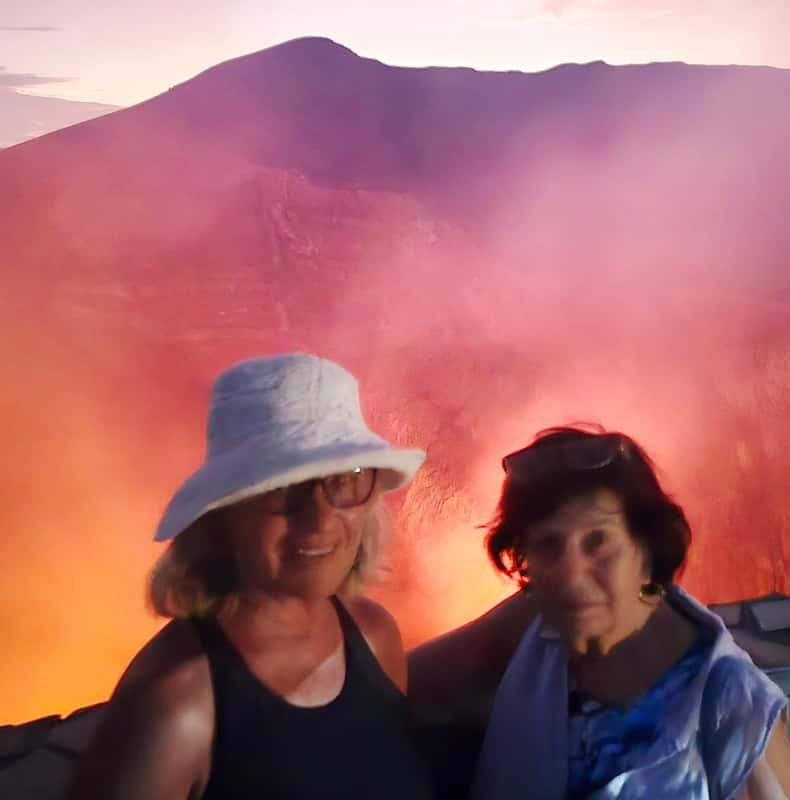
Yes, and it is the single most common cause of a disappointing evening. Cloud in the caldera scatters the light so what should be a clean orange wash becomes a diffuse red haze, and heavy cloud hides it completely.
Travellers who have had that night still tend to rate their guides highly, which is the useful part of the pattern — the evenings that survive it are the ones with the museum, the fumaroles and the trail in them. Masaya Volcano tours reviews shows both sides.
Does wind matter more than rain?
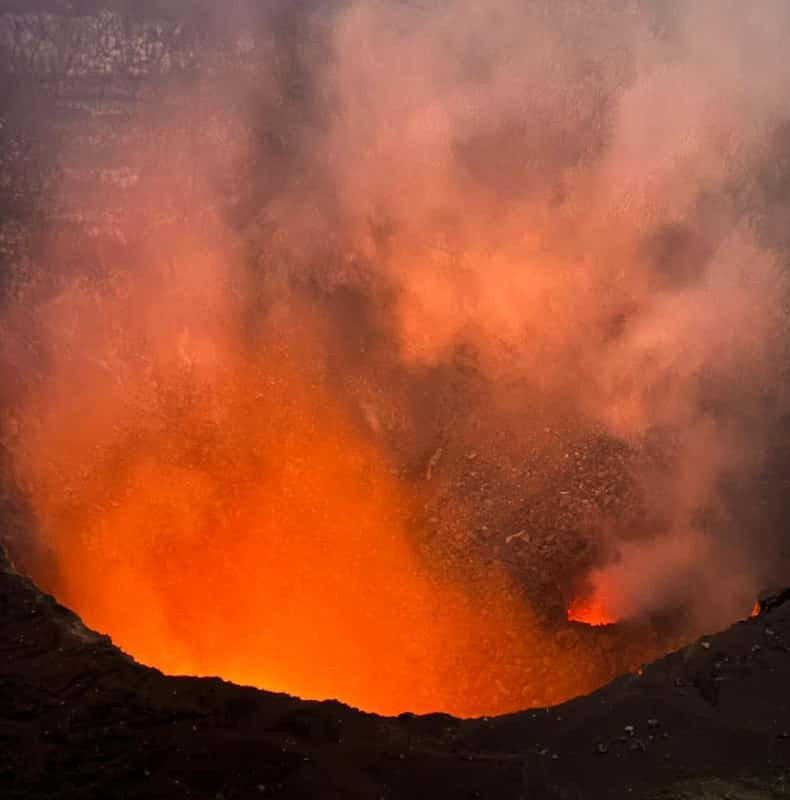
Often, yes. A still evening lets the plume pool over the crater and turn the view into orange fog. A moderate breeze pushes it clear of the rim and gives you the crisp view people photograph.
Wind direction also decides which side of the terrace is comfortable. Guides read this as they arrive and position the group upwind, which is one of the quiet advantages of a guided evening — Masaya Volcano safety covers the mechanics.
What time of evening is best?
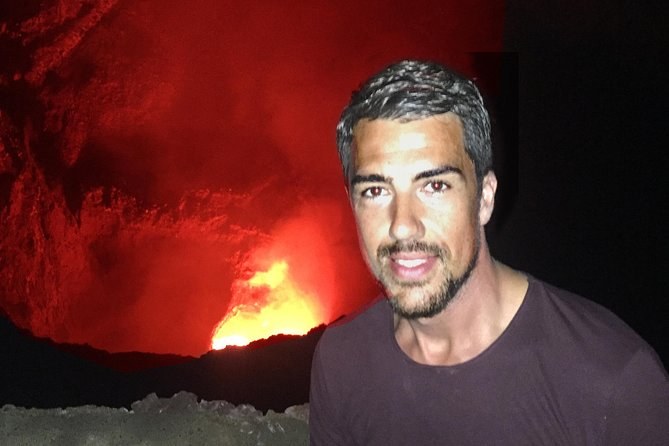
Blue hour: roughly twenty minutes after sunset, when the sky still carries deep blue and the crater is already lit. Before that the glow is washed out; after it the frame is an orange hole in black.
Every guided evening is timed for this, which is most of what you are paying for. Arriving under your own steam an hour after sunset is the classic self-drive mistake — see driving yourself to Masaya Volcano.
Does the moon make a difference?
A little, and not the way people expect. A bright full moon lifts the ambient light, which softens the contrast of the glow but gives you a far better view of the caldera, the cone shapes and the trail underfoot. A new moon gives you the strongest orange and the darkest surroundings.
For photographs, a new moon is better. For a first visit where you want to understand the place as well as see the light, a bright night is more rewarding than it sounds.
Which months are busiest?
| Months | Weather | Crowds | Chance of a clear crater | Notes |
|---|---|---|---|---|
| December – February | Dry, breezy, warm | High | Best | Peak season; book the small groups early |
| March – April | Dry, hot, dusty | High at Easter | Very good | Hottest afternoons of the year |
| May – July | Wet season begins; short heavy showers | Moderate | Mixed | Green caldera, dramatic skies |
| August – September | Wet, humid | Low | Mixed | Quietest evenings at the rim |
| October – November | Wettest, then clearing | Low | Variable | November improves week by week |
When do the tours sell out?
The capped departures go first. A ten-seat evening in January is a different proposition from the same evening in September, and one private day tour is booked around 45 days ahead on average.
Booking early costs nothing because of the 24-hour cancellation window, so in peak season there is no reason to leave it. In the wet season a few days is usually plenty.
What if your date is a washout?
Move it. Every trip compared on Masaya Volcano guided tours refund in full up to 24 hours before departure, which turns a bad forecast into an administrative task rather than a lost fare.
✅ Useful tip. If you have two evenings in the area, book the first one. A clear night and you are done; a poor one and you still have the second, and you have already seen the museum and the trails.
How busy does the terrace actually get?
Busier than the tour photographs suggest, and less busy than you would fear. Vehicles are admitted to the crater car park in batches, so the terrace fills and empties in waves rather than holding a constant crowd. Arrive with a batch and the first two minutes are the most crowded; wait three and the railing thins noticeably as people drift back to their vehicles.
In the dry season each batch is fuller and the waves come closer together. In August or September you can find yourself with a dozen people on a viewpoint that holds several times that. Neither changes what you see — it changes how relaxed the twenty minutes feel.
The small-capacity departures help here more than the season does. Ten travellers arriving together behave differently from forty, and the guide can put the whole group on the upwind end of the terrace at once.
Which month suits a first visit?
January or February if you can choose freely: dry, breezy, the clearest crater views of the year and comfortable evening temperatures. November is the value pick, with the wet season easing and prices and crowds still low.
August and September are the quietest at the rim, which has a real appeal if you would rather share the terrace with ten people than fifty — accepting that some of those evenings will be cloudy.
How warm is it at the rim?
Warmer than newcomers expect and cooler than the afternoon. Masaya sits low, so there is no altitude chill, but the crater terrace is exposed and the breeze that clears the plume also takes the edge off the heat. A light layer is enough in any month.
The afternoon before is the part that catches people. In March and April the caldera floor is bare black rock under full sun, and the walk to El Comalito in the last of the daylight is genuinely hot work. Carry more water than you think you need in those two months.
In the wet season the reverse applies: a downpour on the drive up can leave you standing on the terrace damp in a breeze, which is the one time a jacket rather than a layer is the right call.
Do local holidays change anything?
They change the crowds rather than the volcano. Semana Santa, the week before Easter, is the busiest domestic travel week of the Nicaraguan year and the park feels it: more vehicles in each batch, a fuller terrace and a longer wait on the park road. Christmas and New Year run the same way on a smaller scale.
None of it stops you going, and the evening session's batching means the terrace never gets genuinely dangerous. But if you have a choice of dates in April, the week either side of Easter is a calmer visit than the week itself.
The flip side is that these are also the weeks the capped departures sell out first, so a booking made a fortnight ahead is worth more then than at any other time of year.
Which months photograph best?
January and February, for the same reason they are the best months to see anything: clear air, a reliable sunset and a breeze that keeps the plume off the rim. The dry season also gives you predictable blue hour, which is the twenty minutes the whole photograph depends on.
The wet season's compensation is drama. Storm light over the caldera in the late afternoon, broken cloud catching the last sun, and the occasional evening when the rain clears twenty minutes before dusk and leaves the air completely washed. Those are the best frames anyone takes here — they are simply not bookable.
If photography is the point of the trip, come in the dry season and go twice. Photographing Masaya Volcano at night has the settings.
How to plan around the weather
- Book a flexible date as early as you like; the cancellation window protects you.
- Choose an evening with content — museum, trail, sunset — so a cloudy crater does not empty the trip.
- Watch the wind, not just the rain. A breeze clears the plume.
- Aim for blue hour, which means being inside the gate before sunset.
- Keep a second evening free if your itinerary allows it.
Planning a visit to Masaya Volcano covers the rest of the practical detail.
Questions this guide gets asked
What is the best time of year to visit Masaya Volcano?
December to April, the dry season, gives the clearest crater views. November is the value month, with the rains easing and crowds still low. The glow itself is there all year round.
What is the best time of day for the Masaya Volcano glow?
Blue hour, roughly twenty minutes after sunset, when the sky still holds colour and the crater is already lit. Guided evenings are timed for exactly this.
Can you see Masaya Volcano in the rainy season?
Often, yes. Wet-season showers are usually short and heavy rather than all-day, and the evenings are quieter. The risk is low cloud sitting in the caldera, which is what the 24-hour cancellation window is for.
Should I book Masaya Volcano tours in advance?
In the dry season yes, especially the ten-seat departure from Granada. In the wet season a few days is enough. Free cancellation at 24 hours means early booking costs nothing.
Picked your window? Compare the evenings on Masaya Volcano tours and tickets, or see what the crater looks like at each stage of the light in the Masaya Volcano gallery.
Evenings timed for the light
Departures that put you inside the gate before sunset, which is what the blue-hour argument above comes down to.