Photographing Masaya Volcano at Night
Short answer: shoot handheld, wide open, at ISO 1600–6400, around 1/30 to 1/60 of a second. Blue hour is when the picture actually works — roughly twenty minutes when the sky still holds colour and the crater is already glowing. A tripod is more trouble than it is worth in a short, crowded rim window.
A glowing crater is a harder subject than it looks: enormous dynamic range, a moving gas plume, a railing full of people and a clock. The good news is that a modern phone handles it, and the bad news is that most people spend their whole window fighting settings. Here is how to get it right quickly.
The window you are working in
The park keeps rim visits short and lets vehicles up in batches, so plan for a compressed shoot rather than a session. What that means practically: decide your settings before you get out of the vehicle, take the wide shot first, then work the details. Planning a visit to Masaya Volcano covers how long each trip gives you.
Blue hour is the shot, not full dark
In full darkness you get an orange hole in a black frame, which reads as a blob. During blue hour the sky still carries deep blue, the crater rim keeps its shape, and the orange has something to sit against. That window is short and it is the single biggest difference between a good frame and a snapshot.
This is the argument for booking an evening that gets you inside the park before sunset rather than after it. Day or night at Masaya Volcano explains the timing.
Settings that work
| Setting | Camera | Phone |
|---|---|---|
| Aperture | Wide open, f/1.8 – f/2.8 | Fixed, use the main lens not the tele |
| Shutter | 1/30 – 1/60 handheld | Night mode, 3 seconds maximum |
| ISO | 1600 – 6400 | Automatic |
| Focus | Manual, set on the rim edge | Tap the crater lip, then lock |
| White balance | Fixed around 3800K | Leave automatic, correct later |
| Format | RAW | RAW or ProRAW if available |
Auto white balance fights the orange and often turns it brown. Fixing it manually is the single most useful change on a real camera.
✅ Useful tip. Brace against the railing rather than holding the camera free. It buys you two stops of shutter speed, which is the difference between ISO 6400 and ISO 1600 at the same exposure.
Why the tripod stays in the vehicle
- The window is short and setting up eats it.
- The terrace is busy and legs get knocked.
- The gas plume moves, so a long exposure smears the thing you came for.
- Bracing on the barrier gets you most of the way for none of the hassle.
Composition: give the orange something to argue with
- Include the rim. The dark crater edge gives scale and stops the frame becoming an abstraction.
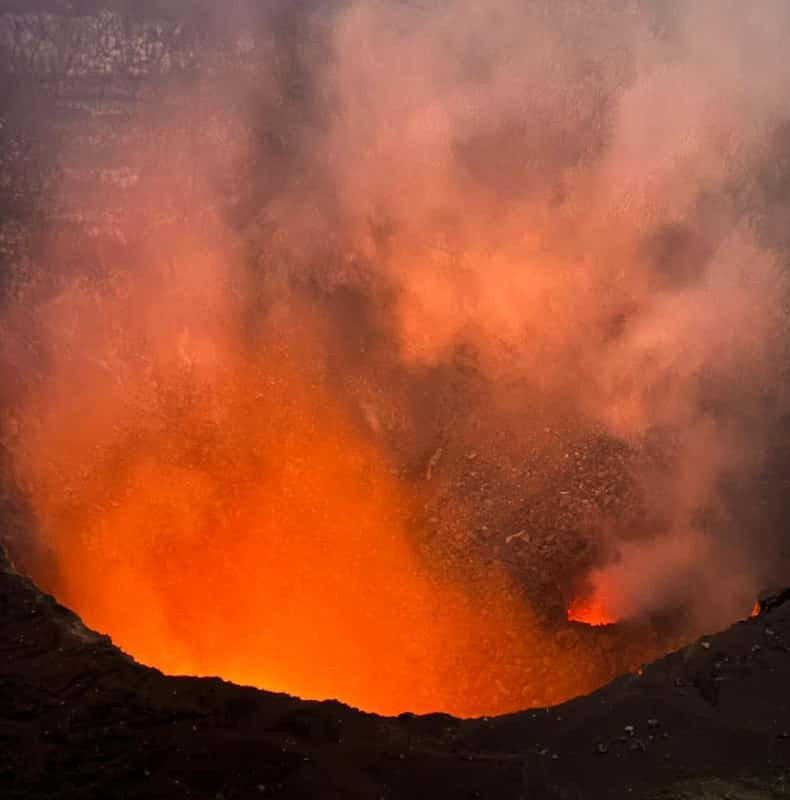
- Shoot the plume. Lit from below, the gas column is often more photogenic than the vent.
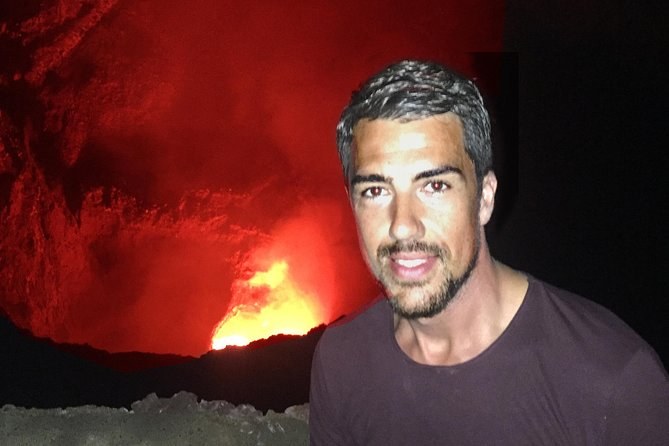
- Put a person in. A silhouette at the barrier does more for scale than any caption.
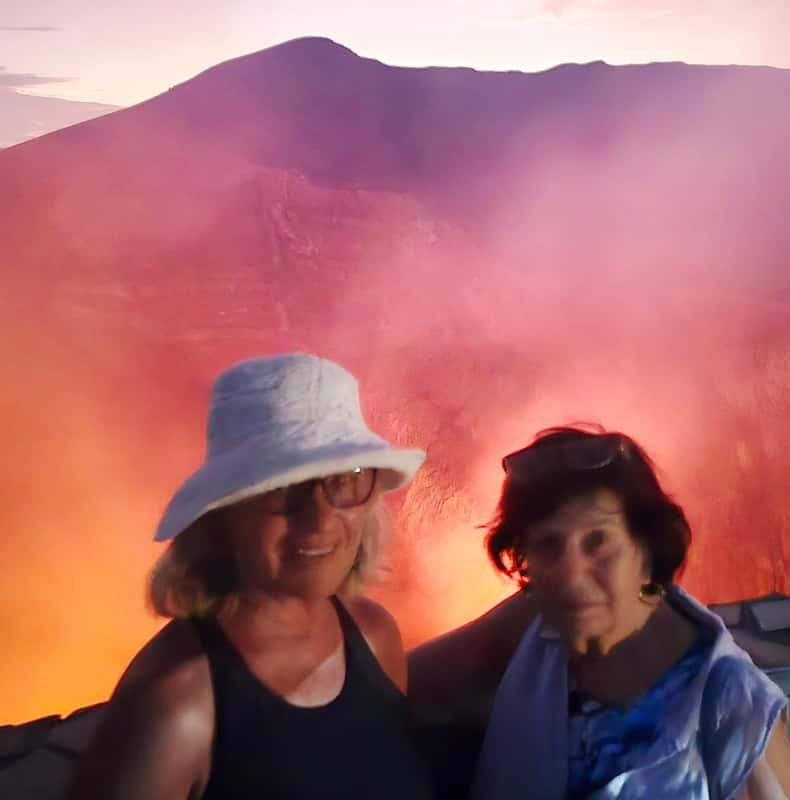
- Turn around. The caldera behind you at dusk, with the last of the light across the lava fields, is the frame most people miss.
Phones, and why they do better here than people expect
A recent phone in night mode will hold the highlight in the crater and lift the rim out of the dark in a way that a camera on automatic will not. The trade is that night mode stacks several seconds of frames, so a moving gas plume comes out soft. Take one night-mode frame for the rim and the sky, then switch to a single short exposure for the plume itself.
Turn the flash off before you get out of the vehicle. It reaches about three metres, lights the railing, and does nothing at all to a crater several hundred metres across.
The wider evening is where the other pictures are
El Comalito at sunset, the fumaroles steaming out of open ground, the museum's heat suit against its painted lava wall, and the Cruz de Bobadilla on the crater lip. An evening that includes those gives you a set rather than one frame — Masaya Volcano National Park lists what each place looks like. The Masaya Volcano gallery shows what they photograph like.
💡 Did you know? The light you photograph is mostly reflected. The vent sits behind its own plume, so what reaches your sensor is orange thrown onto the far crater wall — which is why the glow looks like a wash rather than a line of lava.
Working around other people
The terrace fills as each batch of vehicles arrives, and everyone wants the same three metres of railing. Two things help. Arrive at the edge of your group rather than the middle, and take your wide frame immediately — the crowd thins after a few minutes as people move along. The far end of the terrace is usually emptier and the angle is often better.
Being on a small-group or private departure changes this materially, because you are not waiting on fourteen other people to finish. It is a real argument for the capped trips over the large ones.
When the crater will not cooperate
Thick gas or low cloud turns the whole frame into an orange fog. It is not a fixable problem at the rim, and the answer is to spend the window on the plume and the silhouettes instead, then come back another night if you can. Every departure here refunds in full at 24 hours, so a second attempt is a rebooking rather than a second fare.
A shot list for a short window
- Wide, rim included, at blue hour. Take this first.
- The plume lit from below.
- A silhouette at the barrier for scale.
- A tight frame of the glowing wall.
- Turn around: the caldera and the last of the sky.
Questions people ask about this
What camera settings work at Masaya Volcano at night?
Handheld at f/1.8 to f/2.8, 1/30 to 1/60 of a second, ISO 1600 to 6400, focus manually on the crater rim and fix white balance around 3800K. Shoot RAW so the orange can be corrected later.
Can you take a tripod to Masaya Volcano?
You can, but it rarely earns its place. The rim window is short, the terrace is busy, and the plume moves enough that long exposures smear it. Bracing on the barrier gets you most of the benefit.
What time of evening is best for photographs?
Blue hour, the roughly twenty minutes after sunset when the sky still holds colour and the crater is already glowing. Book an evening that puts you inside the park before sunset - see the best time to see the glow.
Which tour gives the most time for photography?
The private evening from Granada publishes the longest stretch inside the park, and being private means nobody is waiting on you. For the sunset frames as well, take the four-and-a-half-hour evening with the El Comalito walk.
Chasing the light? Book an evening that starts before sunset on Masaya Volcano guided tours, and see what the crater looks like in the Masaya Volcano gallery.
Evenings with the most time in the light you want
Sunset on the trail and the longest stretch at the crater rim.